
The UAE’s construction sector is riding one of its strongest waves in years, but that momentum comes with a catch: material costs are moving fast, and steel is leading the shift. For contractors, fabricators, and procurement teams planning projects across the UAE and the wider Gulf through the rest of 2026, understanding why prices are moving — not just that they are — makes the difference between a budget that holds and one that doesn’t.
Here’s a practical look at where UAE and GCC steel and raw material costs stand heading into H2 2026, what’s driving the changes, and how to plan around them.
A Gulf Region Still Building at Scale
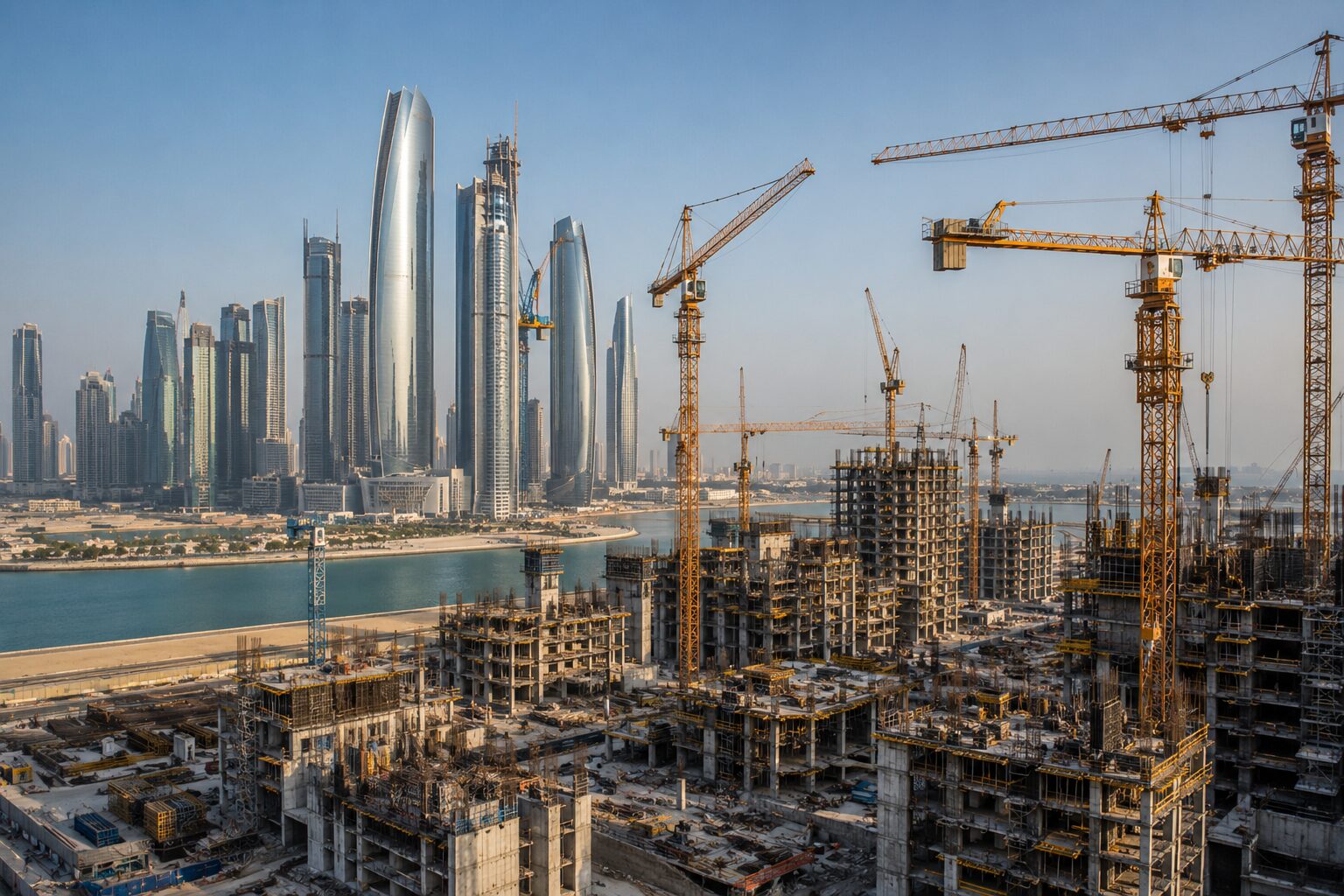
The scale of construction activity across the GCC remains the biggest demand driver behind material pricing. An estimated $951 billion in construction projects is currently active across the region, spanning infrastructure, residential, commercial, and hospitality developments. Dubai and Abu Dhabi continue to anchor that pipeline with logistics hubs, commercial towers, and manufacturing expansion, while Saudi Arabia’s giga-projects add further pull on regional steel supply.
That volume of simultaneous construction across the UAE, Saudi Arabia, Qatar, and Oman is exactly why reinforcement steel and concrete costs have climbed — demand across the Gulf is outpacing what regional mills and importers can comfortably absorb.
How Much Have Steel and Material Costs Actually Moved?
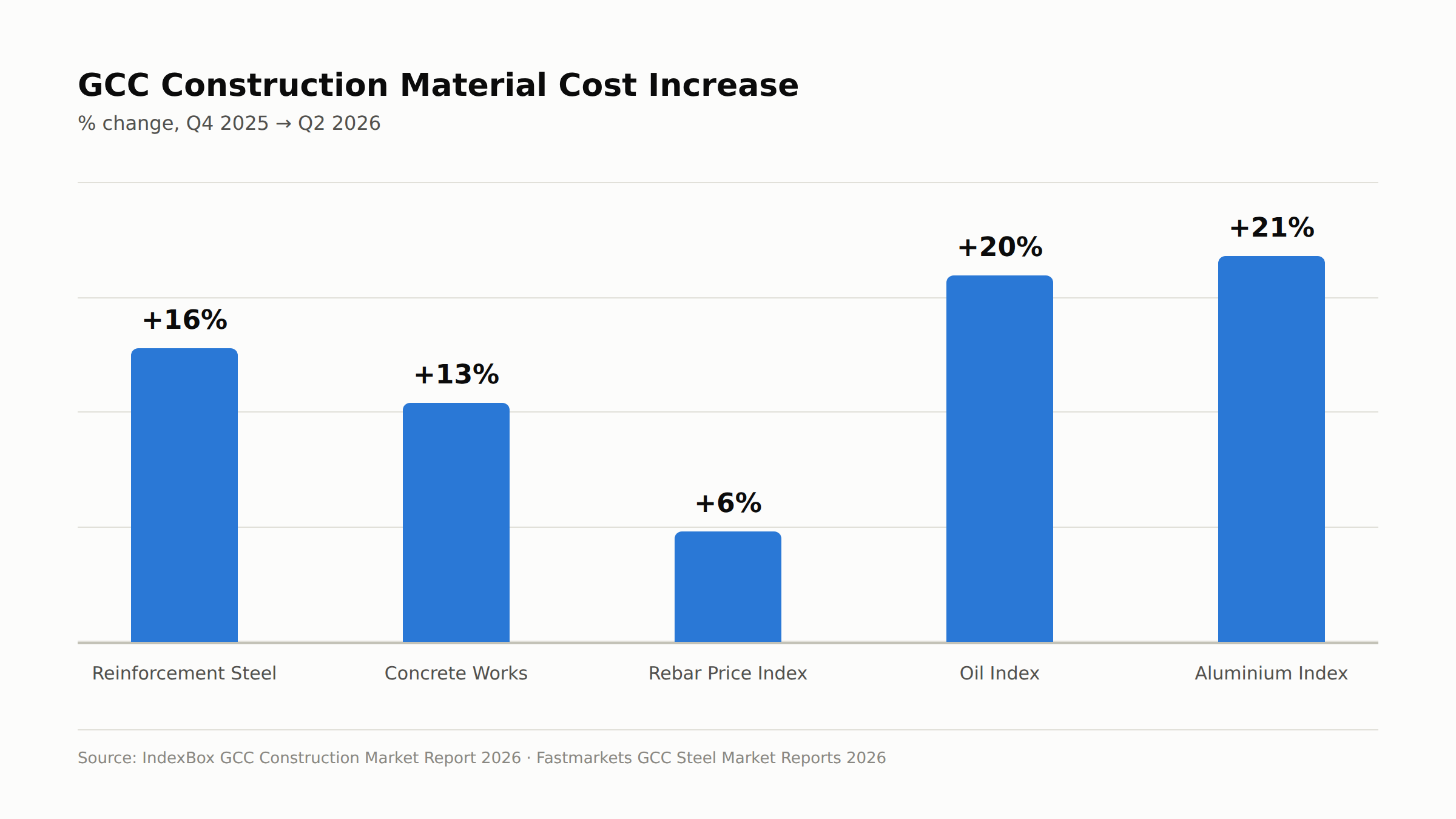
Between Q4 2025 and Q2 2026, GCC construction material costs rose sharply:
- Reinforcement steel (deformed bars) costs increased by roughly 16%
- Concrete works rose by about 13%
- The global rebar price index climbed 6% over the same period, with oil (+20%) and aluminium (+21%) indices rising even faster — both of which feed into steel production and freight costs
Hospitality and high-spec residential projects have felt this most acutely, since they carry the highest concrete and reinforcement intensity per square metre. Several developers have already gone back to their feasibility studies to re-check margins against these new numbers.
The Strait of Hormuz Shock — and the Recovery Since
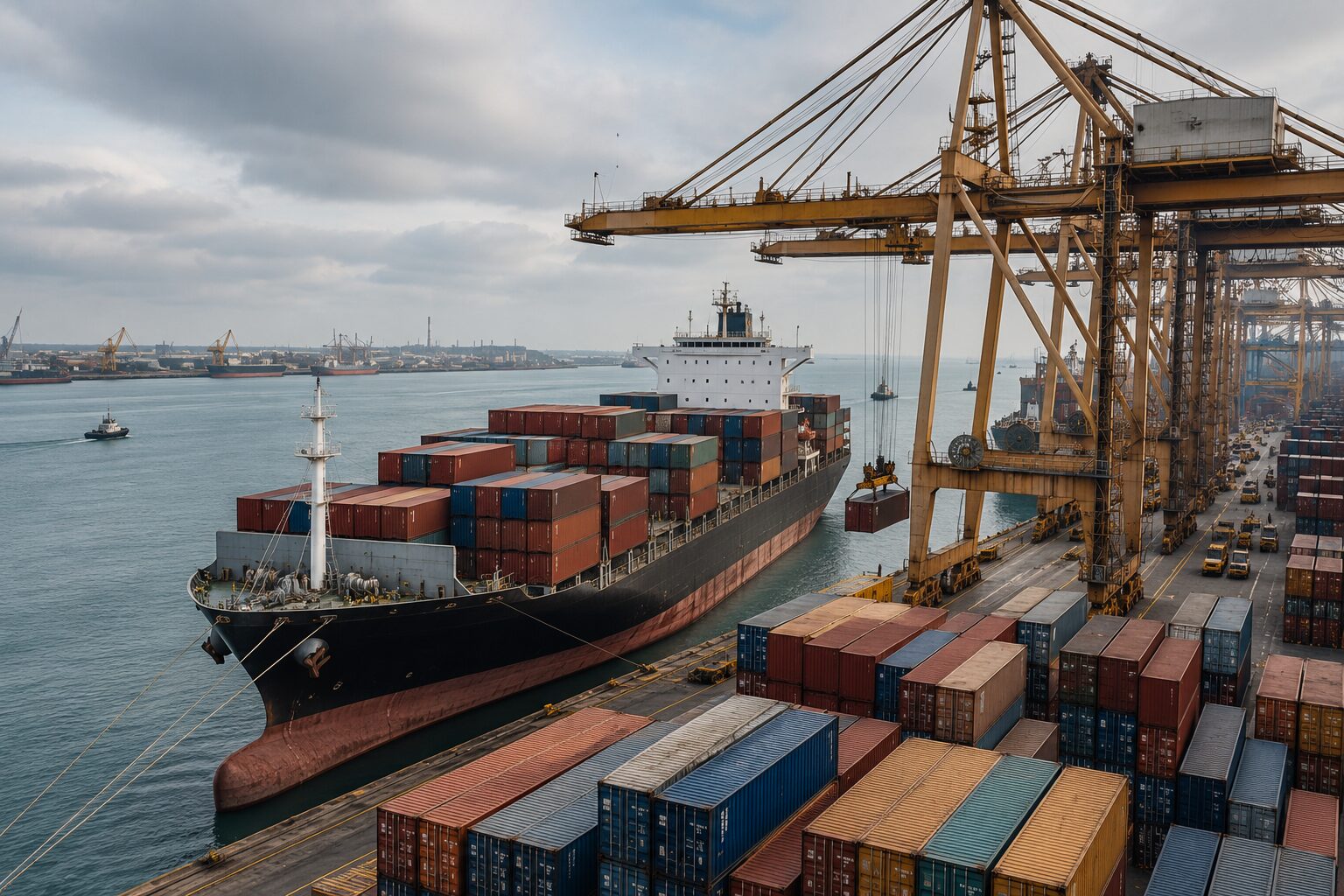
Earlier this year, regional conflict disrupted shipping through the Strait of Hormuz for roughly five weeks, cutting off the flow of iron ore pellets and ferroalloys that Gulf steel mills depend on. The impact on pricing was immediate: rebar in Saudi Arabia and the UAE spiked to around SAR 2,300–2,460 per tonne (roughly $612–655), scrap steel hit record highs, and freight rates for 20-foot containers from India to the UAE jumped from around $300 to as much as $3,500.
Since the ceasefire, the picture has stabilised considerably. By mid-2026, global steel prices had settled into a relatively steady range, and industry reporting points to a balanced outlook for the rest of the year across the UAE and GCC — though freight and insurance costs are still normalising, and shipping capacity hasn’t fully returned to pre-disruption levels.
A Seasonal Cooldown in UAE Rebar Demand
More recently, UAE rebar prices have softened slightly, largely a seasonal pattern: peak summer heat typically slows site activity and offtake, giving contractors room to negotiate rather than accept straight rollovers on pricing. This is a normal mid-year dip rather than a structural shift — demand and pricing have historically picked back up as temperatures ease into Q4.
UAE vs. Saudi Arabia: Why Construction Costs Diverge
Construction benchmarks in Saudi Arabia continue to run higher than in the UAE, largely because Saudi projects lean more heavily on imported materials and longer, more complex supply chains. The UAE’s more mature local steel production and distribution network — including established stockists and traders across Dubai, Abu Dhabi, and Sharjah — gives contractors here comparatively more pricing stability and faster access to stock.
What This Means for Your Procurement Plan
For contractors and project owners working through the rest of 2026, a few practical takeaways stand out:
- Lock in requirements early. With reinforcement steel costs up double digits year-to-date, late-stage procurement carries real budget risk. Confirming quantities and supplier commitments ahead of mobilisation protects your numbers.
- Build in a freight buffer. Even with rates well off their post-Hormuz peaks, shipping and insurance costs remain above pre-disruption norms. Factor this into landed cost calculations rather than relying on last year’s freight assumptions.
- Work with suppliers who hold local stock. Import-dependent supply chains were hit hardest by this year’s disruptions. Sourcing from a UAE-based stockist with reliable inventory reduces exposure to the next shipping bottleneck.
- Use the seasonal dip strategically. If your project timeline allows flexibility, the current summer softening in rebar demand can be a reasonable window to negotiate before Q4 demand picks back up.
Sourcing Steel with Confidence in 2026
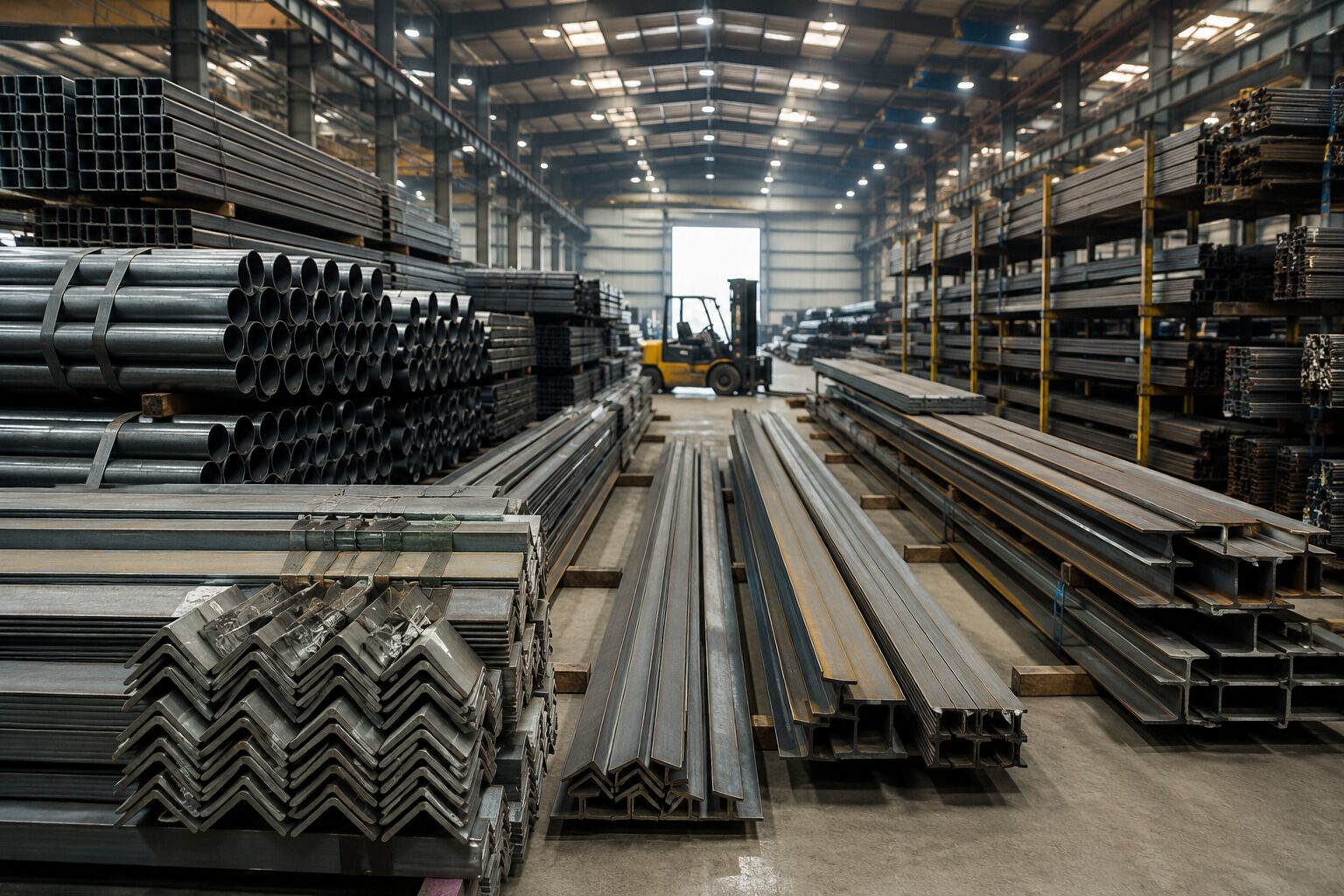
At Mufaddal Steel Trading LLC, we supply a comprehensive range of structural and raw material steel products across the UAE and wider GCC — including MS & GI angles, MS & GI channels, MS & GI pipes, I-beams and H-beams, seamless pipes, deformed bars, MS sheets and chequered plates, GI sheets and coils, round and square bars, and aluminium sheets — backed by local stock, consistent delivery, and pricing that reflects current market conditions rather than outdated assumptions.
If you’re planning a project this year and want a procurement partner who can help you navigate these cost swings, request a quote from our team today.
Call: +971 4 379 1100 / +971 52 923 5527
Email: info@mufaddalsteel.com
Request your quote: mufaddalsteel.com/contact-us
Related reading: Choosing the Right Steel Standard: ASTM, EN, BS & JIS Explained · Why MS & GI Angles Are the Backbone of Modern Construction